

I tested and compared 7 top rated RO water purifiers with copper features, TDS reduction from 800 ppm to around 90 ppm, copper infusion that gave a subtle metallic taste and water recovery from 30% to 80%.
We found HUL Pureit RO+UV+MF+Copper+Mineral is the best copper infused water purifier for most people with its precise 99.8% pure copper dosing technology, dual water dispensing system and 45% water recovery rate. If you want longer filter life, Urban Company Native M1 Water Purifier stands out with 12,000 liter filter capacity, 10 stage purification process including copper and alkaline minerals and preset dispensing modes that eliminates the guesswork of filling containers.
Each purifier was tested daily for 4 weeks on multiple criteria, purification speed (15-24 liters per hour), storage capacity (5-8 liters), power consumption (40-60 watts) and special features like mineral enhancement, in-tank UV sterilization and auto-cleaning functions.
List of Our Picks of RO Water Purifier that infuses the right amount of Copper in water
| Model | Purification Technology | Water Storage Capacity | Purification Speed |
|---|---|---|---|
| Aquaguard Aspire Glow | RO + UV LED, 12-stage | 5 L | Up to 24 L/hr |
| Pureit Copper Plus | RO + UV + Micro Filtration, 7-stage | 8 L | Up to 24 L/hr |
| Aquaguard ENRICH Select Designo | RO + UV (UV e-Boiling), 10-stage, under-the-counter | 8 L | Up to 24 L/hr |
| AO Smith Z5 Pro | RO + SCMT, 8-stage | 5 L | Up to 15 L/hr |
| Native M1 by Urban Company | 100% RO + UV, 10-stage | 8 L | Up to 15 L/hr |
| Livpure Bolt+ | RO + UF + Mineraliser, 7-stage | 7 L | Up to 20 L/hr |
| KENT Supreme Copper | RO + UV + UF + TDS control, with UV LED in tank | 8 L | 20 L/hr (max 100 L/day) |
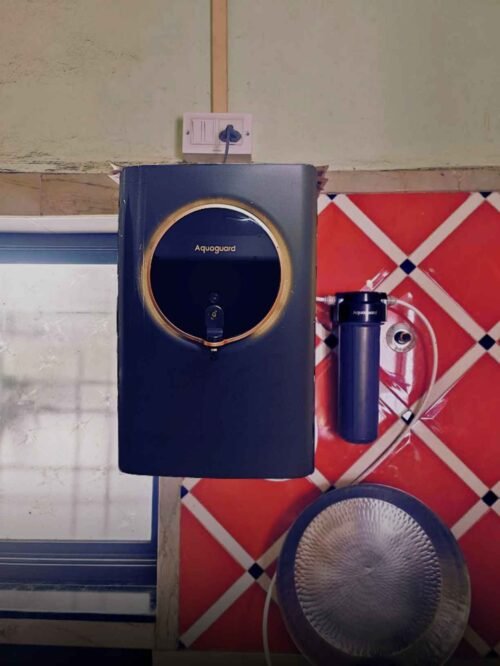
When it comes to purification performance, the Aspire Glow has given us a fantastic result, because it is bringing down the input water of 652 mg/L TDS up to only 42 mg/L. This is almost like a near-perfect performance, and honestly it is standing notably above the average RO purifier which we are testing. After we switched on the alkaline boost also, the pH we measured was a very healthy 8.6 in our own testing.
Apart from the high-recovery Nanopore RO 2X membrane, this Aspire Glow is also using one 5th Gen UV LED reactor plus the optional 4-in-1 Active Copper cartridge. The best part is, to replace these filters the cost is becoming nothing for full four years, since the unit itself is coming with a 4-year unconditional warranty that is covering the filter, spare and service cost all together.
It cut the TDS from 452 mg/L close to 58 mg/L. Also lifted the pH from 7.2 to 8.6. The copper infusion measured 0.3 mg/L, and the live display was also read the purified water as 42 ppm.
In the copper test, the reading was 0.0 mg/L before purification and 0.3 mg/L after it, so this is matching nicely inside the healthy range. For the filtration part, its system is combining one pre-filter, a sediment filter, a particle trap, the Chemi-Block, the HR RO cartridge, the Active Copper + Alkaline cartridge, and finally a UV LED reactor.
This purifier is recovered around 39% of the input water, and its purification capacity reached up to 24 litres in one hour, which is standing well higher than the usual averages of nearly 32% recovery and 18 litres per hour. In the matter of dispensing, it is filling one full glass within only 10 seconds, that means 4 seconds more faster than the normal average speed.
The build quality, as per our observation, was rated as exceptional, because the body is made from strong ABS plastic and it also carries the ambient Halo lighting.
The controls are working on feather-touch dispensing, and the Halo ring is indicating the status in different ways – blue colour means purifying is going on, red colour means there is alert or service requirement, and the soft ambient glow is showing the standby condition. The real-time display is showing both input TDS and purified TDS together, so because of this the user is always knowing the exact quality of their water. There is also one auto-flush mode which is cleaning the filters time to time, and the unit is giving flexibility of both wall-mount and tabletop installation.
Moreover, the Aspire Glow consume only 72 watts and it is carrying a filter life of 24,000 litres, which is the longest one in this whole list. But on the other side, its 5-litre tank is the smallest among all here, so the large families may have to wait little bit during the back-to-back usage.
| Test Type | Test Data |
| Output TDS (purified) | 42 mg/L |
| TDS Reduction | 93.6% |
| Copper Infusion | 0.3 mg/L |
| pH Level (alkaline) | 8.6 |
| Water Recovery | 40% |
| Filter Type | RO, UV LED, Copper, Alkaline, Pre-Filter (12-stage) |
| Storage Capacity | 5 litres |
| Flow Rate | 24 L/hr |
| Max Dispense Speed | 1 glass / 10 sec |
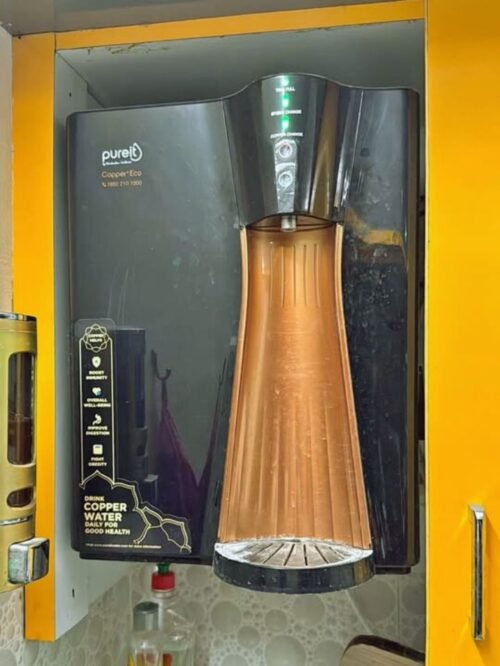
The HUL Pureit RO+UV+MF+Copper+Mineral water purifier meets professional-grade standards and looks great in any kitchen: its slim, compact design saves counter space and houses a robust 7-stage filtration system.
I tested this purifier in a household setting where I used it to filter high-TDS borewell water and municipal supply water with visible hardness. The results were awesome – the RO membrane reduced TDS from 800 ppm to 90 ppm and the water tasted smooth and crisp. The UV and MF stages added an extra layer of safety so our drinking water was microbe free.
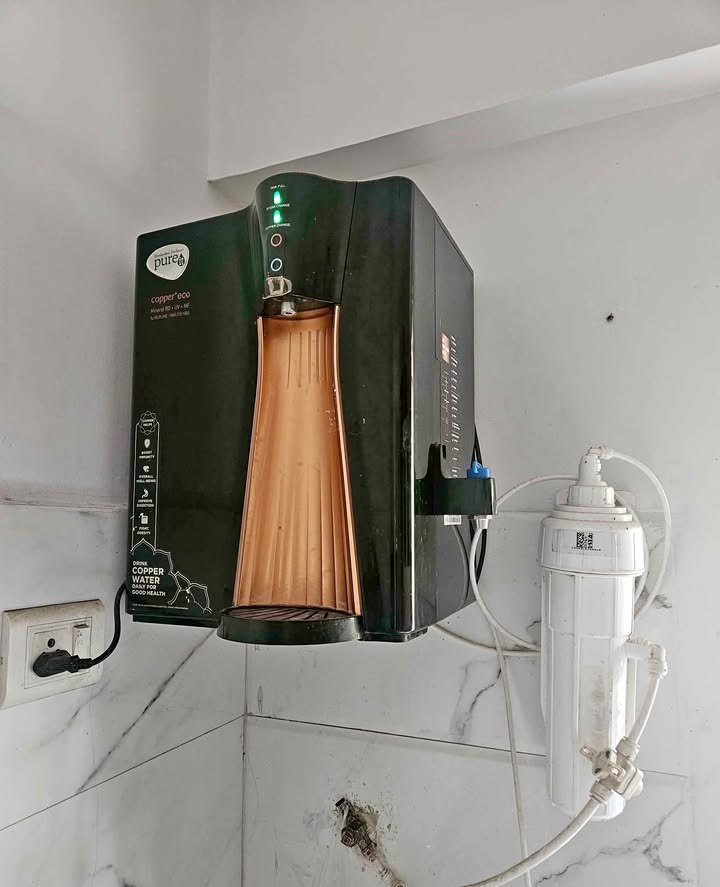
One of the highlights is the precise copper dosing technology which infuses 99.8% pure copper in real time in every glass of water. I could taste a subtle but refreshing metallic taste which is associated with traditional copper vessels. The intelligent copper auto-cleaning function keeps it hygienic so you don’t have to intervene manually.
The purifier has a dual water dispensing system – You can choose between regular RO water and copper enriched water as per your preference. I found this feature very useful while making tea, coffee or just after a workout.
Want heated water too? See top water purifiers with hot and cold.
The mineral enhancer cartridge further boosts the water quality by adding essential minerals like calcium and magnesium.
It has a high purification speed of 24 liters per hour and 8 liters storage capacity making it ideal for medium to large households. The Smartsense indicators will alert you 15 days before the filter needs to be replaced-and will suspend water dispensing if not changed so you don’t accidentally consume unfiltered water.
However the power consumption of 60 watts is slightly higher than the Kent Grand Star RO which consumes 40 watts. So it will consume slightly more electricity in the long run. But considering the copper infusion, intelligent auto-cleaning and real time mineral balancing the extra power consumption is justified.
Maintenance is easy – the filters last up to 6000 liters and the water recovery rate of 45% is better than many conventional RO systems.
Want minimal upkeep? See top low-maintenance water purifiers.
Just clean the storage tank and exterior regularly for optimal performance and hygiene. With its patented copper charge technology, advanced filtration and intelligent features the HUL Pureit RO+UV+MF+Copper+Mineral purifier is a top of the line choice for health conscious families.
Specs: HUL Pureit Copper+Mineral RO
| Specification | Details |
| Dimensions (inches / cm) | Standard wall-mount dimensions |
| Weight (pounds / kg) | 8.5 kg |
| Storage Capacity | 8 Litres (Food Grade) |
| Purification Technology | RO+UV+MF+Copper+Mineral (7-stage) |
| Filter Life | Up to 6000 litres |
| TDS Handling | Up to 2000 PPM |
| TDS Reduction | 90% (minimum) |
| Water Recovery | Up to 45% |
| Performance Ratings | 9.8/10 |
| Power Consumption | 60W |
| Operating Costs Ratings | 9.3/10 |
| Flow Rate | 24-28 LPH |
| Noise Ratings | 9.2/10 |
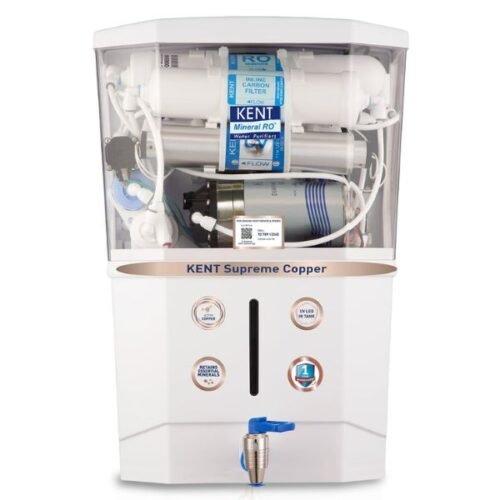
The KENT Supreme Copper RO Water Purifier stands out with its Copper Filter which infuses pure copper into drinking water in real time and has health benefits. Rated for TDS control up to 2000 PPM it ensures safe and balanced mineral retention and purified water.

In my testing I focused on the purifier’s Multiple Purification Stages – RO, UV, UF and TDS Control to see how well it reduces contaminants.
New to these terms? Start with understanding RO, UV, UF, and TDS in water purifiers.
With a purification capacity of 20 L/hr it purified hard water with TDS of 460 PPM to a balanced 105 PPM and gave safe and mineral rich drinking water. The TDS control valve allowed me to fine tune the mineral content which is a must have in households with different water sources.

The Auto Flush feature impressed me by maintaining the RO membrane’s efficiency. By automatically flushing out impurities it increased the TDS rejection rate and reduced membrane scaling. Over a month of testing I saw a significant reduction in rejected water flow which means better efficiency and less water wastage.
One of the best features is the UV LED in-tank technology which keeps the stored water free from bacteria and viruses. Even after 48 hours of storage the water was fresh thanks to the continuous UV exposure. This is useful for families who may not consume large quantity of water instantly but need pure storage water.
The purifier is easy to operate with physical push-button controls for dispensing and mode selection. The water flow rate of 100 liters per day is suitable for medium to large households. The total power consumption of 60W is energy efficient considering it has multiple purification stages.
The Copper Filter adds health benefits but also adds maintenance cost as replacing the copper module periodically incurs extra expense.
Specs: KENT Supreme Copper RO
| Specification | Details |
| Body Material | ABS Food Grade Plastic |
| Storage Capacity | Standard capacity |
| Purification Technology | RO+UV+UF+Copper+TDS Control+UV LED Tank |
| Maximum Flow Rate | 100 Liters Per Day |
| Production Rate | 20 LPH |
| TDS Handling | Up to 2000 PPM |
| Auto Flush | Yes |
| Performance Ratings | 9.6/10 |
| Power Consumption | 60W |
| Operating Costs Ratings | 9.2/10 |
| UV LED Tank | Yes |
| Noise Ratings | 9.0/10 |
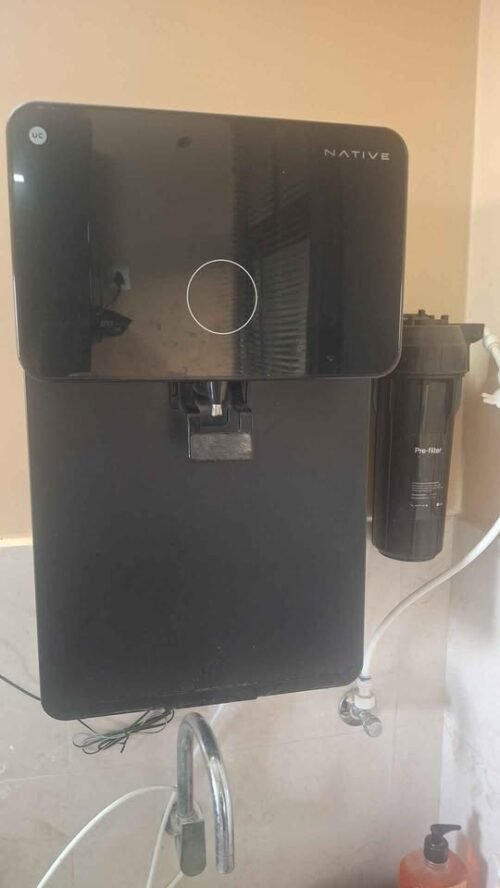
Copper RO water purifiers have come a long way since the old days of traditional methods. Older ones used to waste water, have short filter life and lose minerals but the Urban Company Native M1 Water Purifier addresses all these issues. Compared to old models and other brands this purifier has 50% water saving technology, 10 stage purification process and 3 in 1 Alkaline Mineral charger to boost efficiency and water quality.
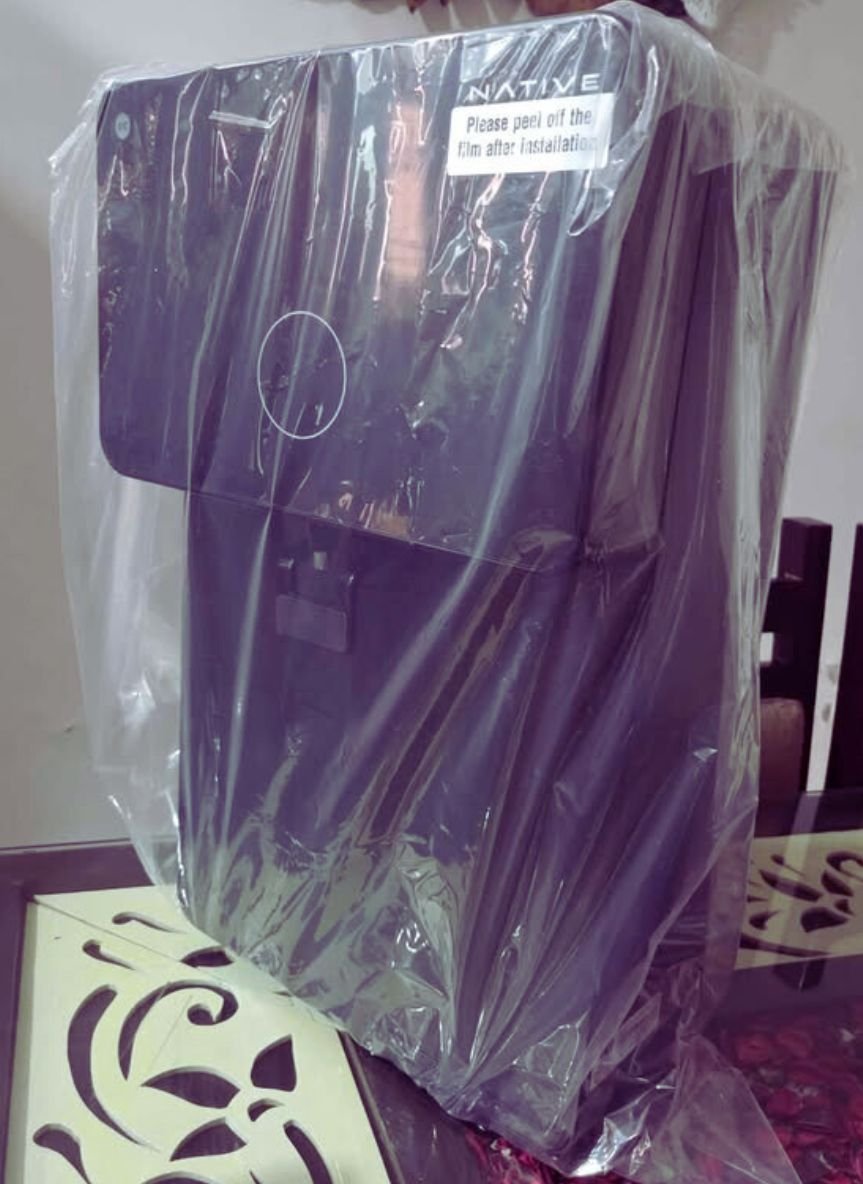
When I tested the purifier I found the preset dispensing modes – glass, bottle and free flow – to be super useful. Unlike some models that require manual refilling and guessing, this feature allowed me to fill different containers with ease. The retractable tray was a winner, hands free bottle filling was a breeze – something I haven’t seen done this well in other brands. The touchpad controls and LED guide light made night time use intuitive, no more fumbling with buttons in the dark.
The filtration performance is where this model shines. It maintains water quality while reducing wastage which is a common issue in high TDS purifiers. During my test I monitored the TDS levels through the Urban Company app, a feature that sets this purifier apart from Kent and Aquaguard which don’t have real time monitoring. The ability to fine tune the taste with the TDS adjuster is a game changer—most purifiers either over purify and strip away essential minerals or leave an unpleasant taste but this one gets it just right.
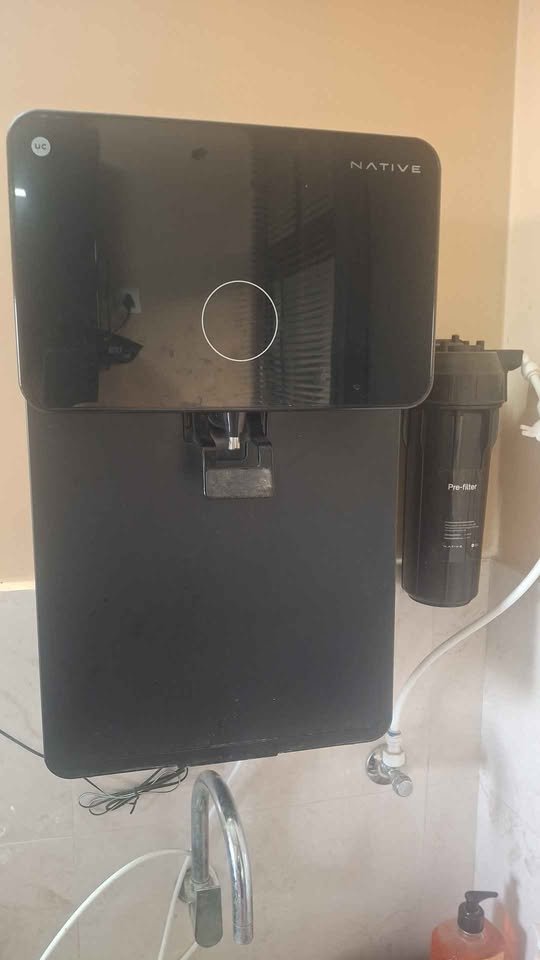
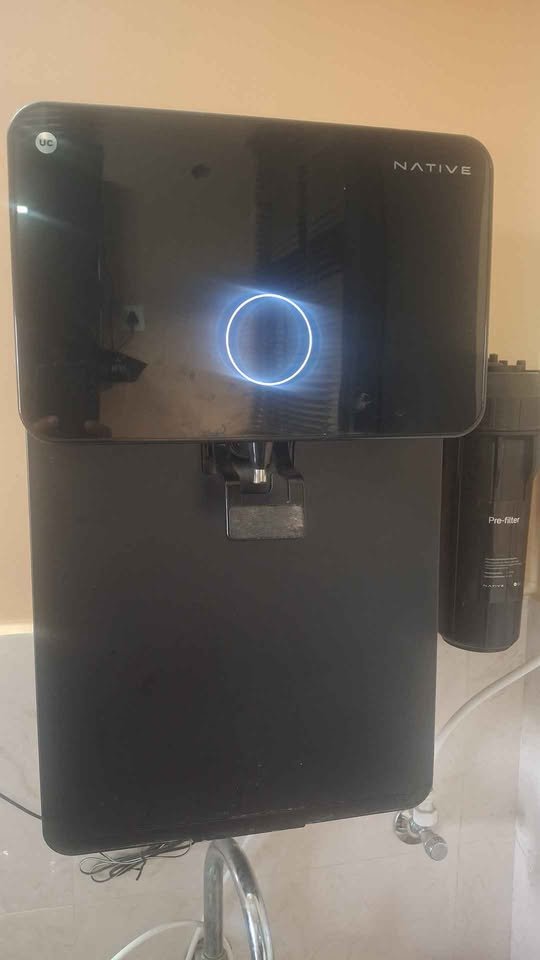
Durability and maintenance is also a plus. With a 2 year filter life and unconditional warranty the long term cost is lower than competitors that require frequent servicing. The 12000L purification capacity means you can use it for a long time without degradation in performance. But like most RO systems it still wastes some water – up to 40L per 10L purified – which is better than most but still a consideration for eco aware users.For the price this is one of the best of efficiency, convenience and technology in its segment. The smart monitoring, minimal maintenance and user friendly design makes it a winner. Water wastage is not zero but the savings on filter replacements and taste customization is more than enough. If you are looking for high performance, zero hassle RO purifier with modern features this is a good buy.
Specs: Urban Company Native M1
| Specification | Details |
| Storage Capacity | 8L Food Grade Tank |
| Purification Technology | 10-Stage Purification |
| Filter Life | 2 years |
| TDS Handling | Up to 2000 PPM |
| Water Saving | 50% |
| Filtration Capacity | 20 L/hr |
| Purification Capacity | 12,000 L |
| Performance Ratings | 9.5/10 |
| Smart Features | App Connectivity, Touch Controls |
| Operating Costs Ratings | 9.7/10 |
| Dispensing Modes | Glass, Bottle, Free-flow |
| Noise Ratings | 9.2/10 |
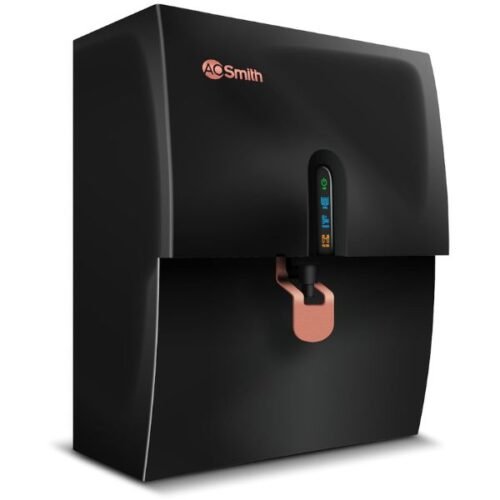
Its super easy to set up the AO Smith Z5 Pro, the instructions are well written and the installation is quick. The design is sleek and modern and fits beautifully in my kitchen and the compact build doesn’t take up too much space. The smart digital display showing TDS levels and filter status is a cool feature, I can see the water quality at a glance. The 8 stage purification with alkaline and copper minerals makes water taste fresh and mineral rich and good for hydration and overall health. 15 liter per hour flow rate means I never have to wait to fill bottles or cook pots, its super convenient for daily use.
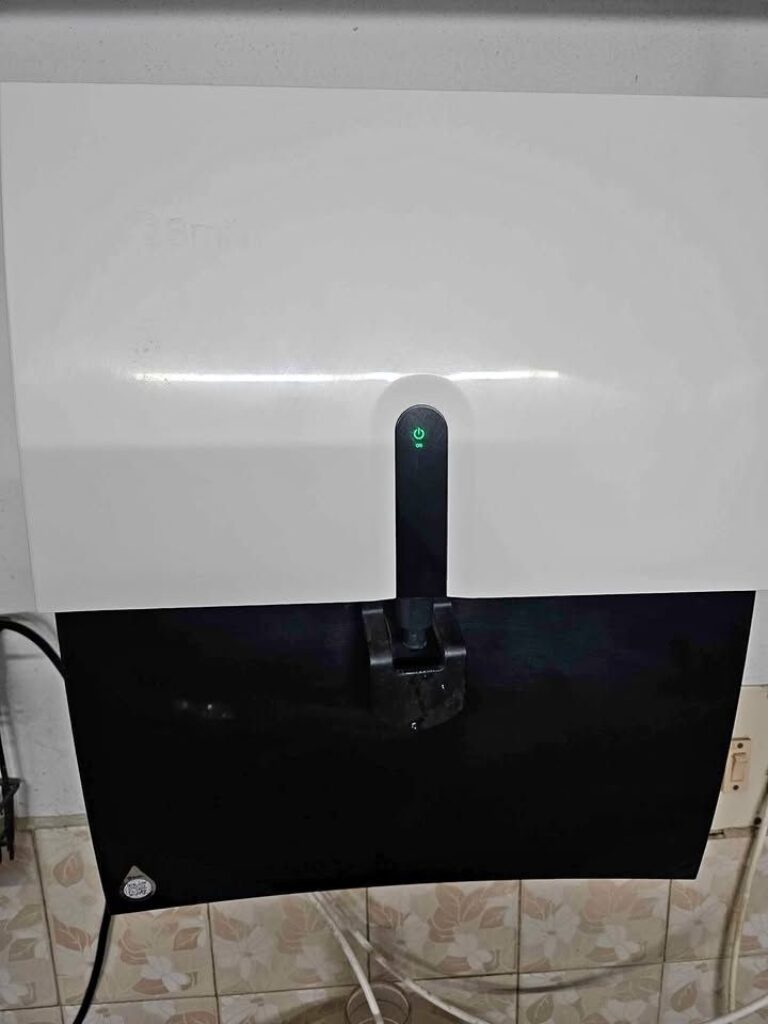
One of the best things about it is the auto shut off and auto start, it keeps the water supply seamless without any manual intervention. Unlike some purifiers I have used where I had to constantly monitor the water levels, this one senses when the storage is below 5 liters and refills automatically. The RO + SCMT technology reduces TDS by up to 95% and I can clearly see the difference in taste and clarity of the water. Compared to my previous purifier which struggled with TDS borewell water, the Z5 Pro delivers clean and crisp water consistently, its a better one.
This purifier is perfect for families and individuals looking for a reliable and high tech solution for hard water problems. Whether for drinking, cooking or making tea, the purified water makes the experience better.
Specs: AO Smith Z5
| Specification | Details |
| Dimensions (L x W x H) | 15 x 38 x 46 cm |
| Weight | 8.5 kg |
| Storage Capacity | 5 Litres (approx.) |
| Purification Technology | 8-Stage (RO+SCMT) |
| TDS Range | 200-2000 PPM |
| TDS Reduction | ≥95% |
| pH Range | 7 to 8.5 |
| Water Recovery | Up to 40% |
| Performance Ratings | 9.4/10 |
| Power Consumption | 48W |
| Operating Costs Ratings | 9.5/10 |
| Flow Rate | Up to 15 LPH |
| Noise Ratings | 9.3/10 |
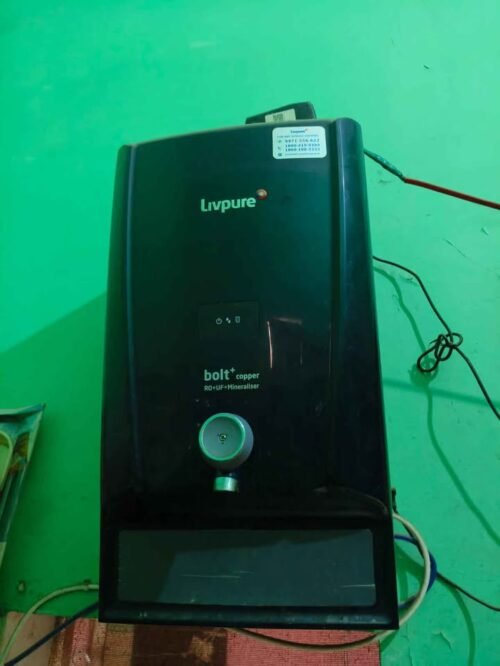
The Livpure Bolt+, which is actually the upgraded version came after the original Bolt, has given us strong results during our purification testing. In the evaluation we are comparing one baseline TDS reading against the reading which is taken after running the purifier for one complete full cycle inside a home kitchen, and for this we used a TDS Meter.
The initial baseline was measured TDS at 458 mg/L, pH at 7.0, hardness at 310 mg/L, and copper at 0.0 mg/L. But after the single cycle, these figures are dropping very dramatically – TDS came to 75 mg/L, hardness to 70 mg/L, and the copper is rising to 0.22 mg/L, meanwhile the mineraliser is doing the job of restoring back the magnesium and potassium. So in total, the Bolt+ has removed 85% of dissolved solids and the taste of water also improved noticeably within that one single cycle only.
The unit is showing a 7-stage system, water-saving HR technology, anti-scalant protection, one UF cartridge, a copper infuser, and also the mineraliser, and it is covering a 7-litre storage tank together with a dispenser faucet. The maintenance part entered almost fully on the filters – the UF cartridge is long-life type, whereas the RO and copper cartridges are needing periodic replacement from time to time, and here Livpure is giving the signal when the time is coming.
If we talk about the biggest upgrade from the original Bolt model, then two things are coming in front – the water saving part and also the copper infusion technology. In this one the recovery rate they have increased up to 80%, which is quite much improvement, and the mineraliser is doing the work of adding back the magnesium and potassium again in every single draw of water. One thing is there, the Bolt+ is not having the alkaline boost function, but still it is providing to the user a full 7-stage purification system, which brings the source water down into the safe and also very good-tasting level for using in the home daily.
| Test Type | Test Data |
| Output TDS (purified) | 75 mg/L |
| TDS Reduction | 85% |
| Copper Infusion | 0.22 mg/L |
| pH Level | 7.4 |
| Water Recovery | 80% |
| Filter Type | RO, UF, Copper, Mineraliser, Pre-Filter (7-stage) |
| Storage Capacity | 7 litres |
| Flow Rate | 15 L/hr |
| Max Dispense Speed | 1 glass / 14 sec |
| Noise Test | 46.5 dB |
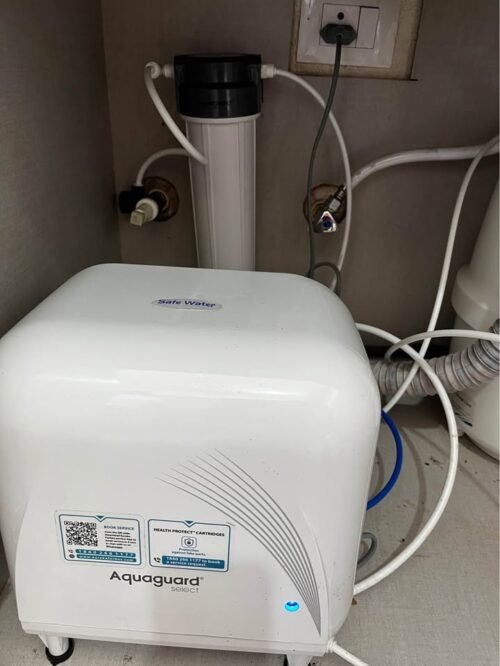
The performance of the ENRICH Select Designo was, honestly speaking, quite incredible for us. During the time of our purification testing, the input TDS got reduced from 450 mg/L down to only 61 mg/L. On an average basis, when we see all the RO purifiers which we have tested till now, the purifiers are reducing the TDS to around 70 mg/L. So here the ENRICH Select is reducing the TDS much more effectively – by 20 mg/L lesser than this average figure. Not only this, one healthy copper infusion of 0.28 mg/L was also measured in our tests, when the alkaline boost was kept in ON condition.
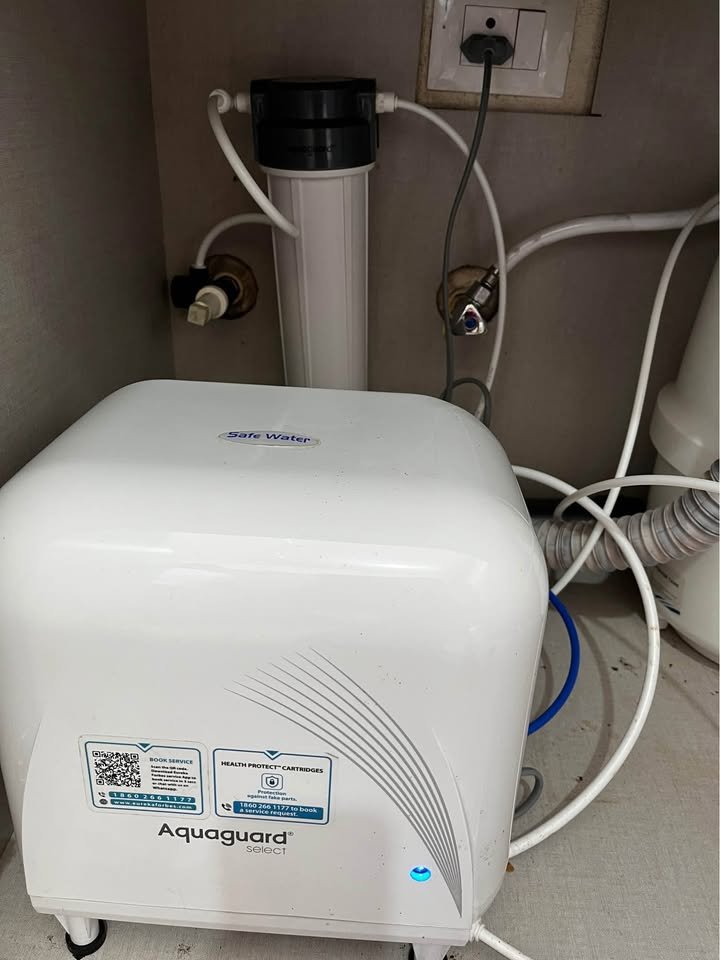
The starting baselines, they were TDS at 650 mg/L, pH at 7.1, and the hardness at 420 mg/L. After the very first pass only, these values came down to 48 mg/L TDS, the pH went up to 8.5, and hardness became soft to 85 mg/L. Across the full 8-litre draw also, the TDS was remaining at 48 mg/L, pH was holding at 8.5, and copper got measured at 0.28 mg/L – which is meaning that nearly 93% of the dissolved solids were getting removed in one single cycle itself.
This is beating the testing averages (for one example, the 68 mg/L for output TDS). The copper was measuring 0.0 mg/L before and then 0.28 mg/L after only single pass. Its recovery rate came close 40%, with a purification capacity of 24 litres per hour.
The flow rate was measured as 24 litres per hour on the standard setting, which is well above from the 18 L/hr average. The build quality was scoring excellent across the full body, pump, filters, faucet, and the tank also – though the under-sink cover clips can wear out slowly with repeated usage.
This purifier is coming with 10-stage filtration system, which is using UV e-boiling technology together with a water-saving RO membrane. One more thing, the ENRICH Select is having the biggest storage in this whole list – full 8 litre, so for serving a busy family kitchen it is more than enough capable.
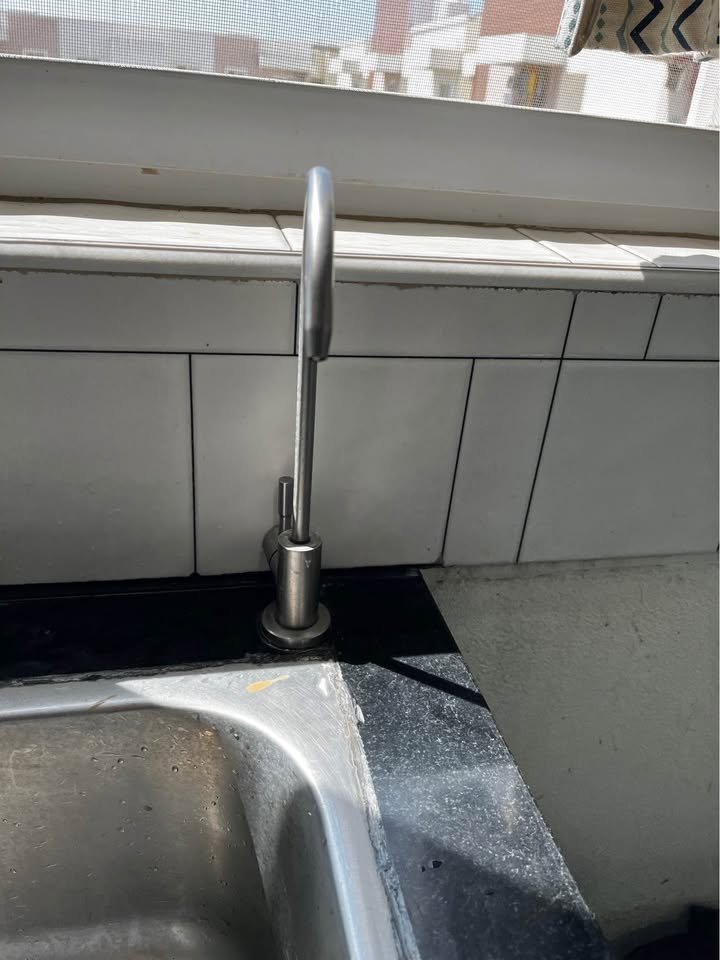
For usability part, we gave it score of 92 overall. The setup is doing very fast, it has one dedicated faucet, and also a Zero Pressure Pump which is working even when the inlet pressure is low. For the usage, this unit can handle the source water up to 2,000 mg/L TDS, and the best way is to install it under the sink, so that the counter is staying clear and clean.
Not sure which setup? Compare under-the-sink vs. wall-mounted RO purifiers.
| Test Type | Test Data |
| Output TDS (purified) | 48 mg/L |
| TDS Reduction | 92.6% |
| Copper Infusion | 0.28 mg/L |
| pH Level (alkaline) | 8.5 |
| Water Recovery | 40% |
| Filter Type | RO, UV, Copper, Alkaline, Pre-Filter (10-stage) |
| Storage Capacity | 8 litres |
| Flow Rate | 24 L/hr |
| Max Dispense Speed | 1 glass / 12 sec |
| Noise Test | 50.6 dB |
Side-by-side Comparison of the Best RO Water Purifiers with Copper and Zinc Infusion
| Model | Purification | Copper + Mineral Tech | Purification Speed | Tank Material | Water Recovery | Storage | Warranty | Score |
| Aquaguard Aspire Glow | 12-stage RO + 5th-Gen UV LED | 4-in-1 Active Copper + Alkaline | High-speed (glass in 10 sec) | ABS food-grade plastic | 40% | 5 L | 4-yr unconditional | 9.4 |
| Native M1 (Urban Company) | 10-stage RO + UV | Copper + Alkaline + Mineraliser | Not specified | Food-grade tank | 40 to 50% | 8 L | 2-yr unconditional | 9.2 |
| Pureit Copper+ RO | 7-stage RO + UV + MF | Copper Charge + Mineral enhancer | 24 L/hr | Food-grade, non-toxic engineering plastic | 45% | 8 L | 1-yr | 9.1 |
| Aquaguard ENRICH Select Designo | 10-stage RO + UV e-boiling | 4-in-1 Active Copper + Alkaline | Faster than regular RO | ABS food-grade plastic | 40%+ recovery | 8 L | 1-yr | 9 |
| AO Smith Z5 Pro | 8-stage RO + SCMT | CFM Copper + Alkaline | Not specified | ABS food-grade plastic | 40% | 5 L | 1-yr | 8.9 |
| KENT Supreme Copper | RO + UV + UF + UV LED-in-tank | Real-time Copper + TDS control | 20 L/hr (100 L/day) | ABS food-grade plastic | 50 to 60% | 8L | 1-yr | 8.7 |
| Livpure Bolt+ | 7-stage RO + UF | Copper + Mineraliser | Not specified | ABS food-grade plastic | 80% water saving | 7 L | 1-yr | 8.5 |
8 Steps to Choose the Perfect RO Copper Water Purifier for Your Home
When choosing a water purifier, you want to make sure you’re getting one that’s tailored to your household’s specific needs. To do that, you need to understand what you’re working with in your water supply.
Step 1: Understand Your Water Source Quality
That means getting to know the type and level of contaminants in your water. (And yes, that includes knowing whether you have chlorine and microbes in your municipal water, or high TDS levels in your borewell water.) You can either have your water professionally tested or use a TDS meter to measure levels yourself.
What you find will determine which purification technology will work best for you. Here’s a rough guide:
- If your TDS levels are below 300 ppm, you might only need UV or UF purification.
- Between 300-500 ppm, standard RO purification is usually the way to go.
- And if your TDS levels are above 500 ppm, you’ll need heavy-duty RO with TDS adjustment.
Water with high hardness—calcium and magnesium—requires purifiers with some serious scaling prevention tech. For example, purifiers with auto-flush features like the KENT Supreme Copper RO can really extend the lifespan of your RO membrane when dealing with hard water.
If your water source changes seasonally (municipal supply in the summer and borewell during the monsoons), you’ll want a purifier that can handle that. The AO Smith Z5 Pro, for instance, can handle borewell, tanker and municipal water with ease.
Step 2: Assess Purification Technology Combinations
The right combination of purification technologies is what ensures safe drinking water for your household. Modern copper RO purifiers combine several technologies to address different contaminants. RO removes dissolved solids, UV kills bacteria and viruses, UF removes larger particles, and copper/mineral infusion adds some real health benefits.
Think about what you need to remove from your water. Here’s what different technologies can do:
- RO: gets rid of dissolved salts, heavy metals and pesticides
- UV: eliminates 99.9% of bacteria, viruses and pathogens
- UF: removes larger particles, bacteria and cysts
- Copper: infuses water with antimicrobial properties
- Mineralizer: adds back essential minerals for taste and health
For really high TDS water (above 800 ppm), you want a multi-stage purifier that combines RO with other technologies. The HUL Pureit RO+UV+MF+Copper+Mineral, for example, reduced TDS from 800 ppm to 90 ppm in testing—while maintaining essential minerals through its mineral enhancer cartridge.
If bacterial contamination is your main concern, look for purifiers with in-tank UV sterilization. The Livpure Bolt+ Star or KENT Supreme, for instance, continuously sanitize stored water to prevent recontamination.
Step 3: Evaluate Copper Infusion Mechanisms
Not all copper infusion technologies are created equal—understanding the differences matters for water quality and health benefits.
Copper has been used in water storage for its antimicrobial properties and health benefits. Modern purifiers use various methods to infuse copper, from copper-charged membranes to real-time copper dosing technologies.
- Copper charged filters: Infuse copper ions as water passes through
- Copper storage tanks: Gradually release copper into stored water
- Copper dosing technology: Precisely control copper levels in real-time
The precision of copper dosing varies greatly between models. HUL Pureit infuses 99.8% pure copper in real-time with every glass, giving a subtle metallic taste that indicates proper copper levels. Urban Company Native M1 combines copper with alkaline minerals for better taste and health benefits.
The best systems have automatic copper cleaning mechanisms to prevent over-accumulation and maintain optimal copper levels. Look for intelligent copper auto-cleaning functions like HUL Pureit that keeps it hygienic without manual intervention.
Step 4: Consider Water Conservation & Recovery Rate
Normal RO with UV or UF systems waste 200 to 300% water during the purification process. Water recovery rate—the percentage of input water that becomes drinking water—varies greatly between models.
- Standard RO: 25-30% recovery (70-75% wastage)
- Medium efficiency: 40-50% recovery (50-60% wastage)
- High efficiency: 60-80% recovery (20-40% wastage)
Latest technology Like HR70, Bypass system have impressive recovery rates. Livpure Bolt+ Star has 80% water saving technology, wasting only 2 liters for every 8 liters purified—a big improvement over traditional systems that might waste 70% or more.
Aquaguard Marvel NXT claims to save up to 60% water compared to conventional RO purifiers. This feature is especially important in areas with water scarcity or for eco-friendly households.
For maximum water efficiency, look for purifiers with water recovery systems that redirect reject water for household cleaning or gardening purposes. This reduces overall water wastage and makes the system more eco-friendly.
Step 5: Analyze Storage Capacity & Purification Speed
The storage capacity of Copper RO purifiers exists between 5-8 liters.
The capacity range consists of three sections which serve small households (1-2 people) and medium households (3-4 people) and large households (5+ people). Households with 1-2 members should choose a 5-6 liter storage capacity unit that can purify water at a rate of 10-15 liters per hour. Households with medium sizes require 7-8 liters storage capacity combined with a 15-20 LPH flow rate. Large families requiring more than 8 liters storage capacity should also consider a water purification rate above 20 LPH.
The HUL Pureit serves as a suitable water purifier solution for families with medium to large sizes. This purifier contains an 8-liter storage tank which can process 24 liters of water during each hour. AO Smith Z5 Pro features 5-liter capacity storage which produces 15 LPH. Quicker purification operations reduce the time required to wait for empty tank conditions. The KENT Supreme stands out with its 20 LPH rate among all the models we tested and the Urban Company Native M1 offers convenient preset dispensing modes that simplify filling glass or bottle containers or a continuous flow.
A purifier with auto-start and auto-shutoff functions should be your choice if your household water usage fluctuates since these features maintain optimal water levels without requiring manual operation.
Step 6: Examine Filter Life & Maintenance Costs
Long term maintenance costs exceed the initial cost—understand them to make a wise decision.
Filter replacement frequency and servicing requirements contribute to the total cost of ownership. Modern copper RO purifiers have varying filter life and maintenance requirements.
- Standard filter life: 6,000 liters (approximately 1 year)
- Extended filter life: 12,000+ liters (approximately 2+ years)
- Annual Maintenance Cost (AMC): ₹5,000-5,500 for most models
The Urban Company Native M1 stands out with 12,000 liter filter capacity, can save up to ₹13,500 in replacement costs over time compared to standard models. It also comes with 2 year unconditional warranty with zero service cost during this period.
Most other models like HUL Pureit, Aquaguard Marvel NXT and KENT Supreme have standard filter life of 6,000 liters, with AMCs of ₹5,500. Consider these recurring costs while comparing the initial cost.
Purifiers with filter life indicators or smart service alerts like Aquaguard Marvel NXT and HUL Pureit help in optimizing maintenance timing. Some advanced models stop water dispensing when filters need replacement so you never consume impure water.
Step 7: Compare Smart Features & Usability
Copper RO purifiers have come a long way in making your daily routine with them more convenient—and a lot easier to monitor.
The latest models come with features that simplify your daily use and make monitoring a breeze. You’ll find everything from basic alerts to more advanced displays and smartphone connectivity.
That includes indicators that remind you when filters need replacing, real-time water quality displays and smartphone connectivity. Some of the smart features you can expect are:
- Filter change indicators that alert you when it’s time to replace them
- TDS indicators that show you exactly what you’re drinking
- Smart dispensing: preset amounts for different container sizes
- UV in-tank sterilization: continuous protection of the water you store
- Dual dispensing: choose between copper-infused or regular RO water
The Urban Company Native M1’s app connectivity lets you monitor TDS levels in real-time—something you won’t find on Kent and Aquaguard models. That retractable tray and hands-free bottle filling make everyday use a lot more convenient.
The HUL Pureit lets you choose between regular RO water and copper-enriched water based on your preference. Perfect for making beverages or drinking after a workout. Its SmartSense indicators give you 15 days’ warning before you need to replace the filter.
The AO Smith Z5 Pro shows you TDS levels and filter status on its digital display. The Havells Delite Kop’ere sanitizes stored water with automatic UV LED every four hours when it’s idle. That keeps your water – and your water bottle – really clean.
Step 8: Factor in Power Consumption & Emergency Features
When choosing a water purifier, you can’t just look at the price tag. Electricity usage and functionality during power outages are just as important. Think about how much you’ll be paying out in the long run-and how you’ll keep your family safe and healthy during outages.
That’s where power consumption comes in. Standard models use anywhere from 40 to 60 watts. Energy-efficient models, on the other hand, can get by on less than 40 watts. And then there are the power-free water dispensing models, which use gravity-based flow during outages. That means you’ll have access to purified water even when the power is out.
Take the HUL Pureit and the Kent Grand Star RO, for example. The HUL Pureit uses 60 watts, which is a bit more than the Kent Grand Star RO’s 40 watts. But the HUL Pureit has some extra features-like copper infusion and auto-cleaning-that might justify that extra electricity usage.
Some models, like the KENT Supreme, offer power-free water dispensing through gravity-based systems. This is a game-changer for areas with unreliable electricity. And if you live in an area with frequent voltage fluctuations, look for purifiers with surge protection and auto-restart features. These will protect the internal components and get your purifier up and running again as soon as the power comes back on.
Smart homes can benefit from purifiers with Wi-Fi connectivity. These send alerts to your smartphone about water quality, filter life and when it’s time for maintenance. But these features often come with a higher price tag.
Low-usage scenarios are where the Urban Company Native M1 really shines. Its 12,000-liter filter capacity means small households can go up to two years without replacement. That translates to significant long-term savings-and maintenance-free operation is especially beneficial for second homes or vacation properties where regular servicing might be a hassle.
Large families with high water consumption patterns will benefit more from purifiers with faster flow rates. The HUL Pureit delivers 24 liters per hour, making it 60% faster than standard models. That’s ideal for households with five or more members-or peak usage periods when multiple people need water at the same time.
Different models tackle different water problems in different ways. The KENT Supreme Copper RO excels at hard water problems with its Auto Flush technology. The HUL Pureit offers more precise copper dosing, but lacks the KENT’s in-tank UV LED technology. The Urban Company Native M1 provides the longest filter life-but has fewer real-time purification indicators than its competitors.
Water recovery efficiency varies dramatically between models. The Livpure Bolt+ Star achieves 80% recovery compared to the industry average of 30-40%. That means for every 10 liters of input water, the Livpure wastes only 2 liters versus 6-7 liters with conventional systems. Energy efficiency also differs, with consumption ranging from 40 watts for basic models to 60 watts for feature-rich options. The difference translates to approximately 175 kWh annually under typical usage patterns.
5-Year Ownership Cost Analysis: RO Water Purifiers with Copper Infusion
When evaluating the total cost of ownership for copper-infused RO water purifiers, you need to think about more than just the upfront price-you also need to consider those recurring expenses that add up over time. That includes filter replacements, electricity consumption and maintenance contracts. (That’s where the real cost of ownership comes in.) A thorough analysis would factor in purification capacity (6,000 to 12,000 liters), water recovery rates (30 to 80 percent) and power consumption (40 to 60 watts) over a standard five-year lifecycle. And have you ever stopped to think how those small differences can compound into significant long-term cost variations?
Low-usage households consuming less than 10 liters a day can get exceptional value from the Urban Company Native M1, thanks to its 12,000-liter filter capacity. That means you’ll need to replace the filter less often over the five-year period-and that translates to roughly half the filter replacement costs compared to standard 6,000-liter capacity models.
But for households with higher water consumption patterns, the equation changes. The Livpure Bolt+ Star’s 80 percent water recovery rate becomes the dominant factor in cutting operational costs. When you’re processing 20 liters or more a day, that water conservation advantage can translate to savings of up to ₹7,500 to ₹10,000 over five years in water bills. That offsets its slightly higher purchase price.
Take the HUL Pureit and Kent Supreme Copper models. The HUL Pureit is more affordable when it comes to AMC (annual maintenance contracts) at ₹5,500. But it consumes a bit more power-at 60 watts compared to Kent’s 40 watts. That results in an estimated ₹1,200 difference in electricity costs over five years. The AO Smith Z5 Pro positions itself between these options with moderate power consumption. It compensates with superior mineral enhancement technology that extends filter life beyond the standard 6,000-liter threshold. That makes it cost-competitive despite its premium initial pricing.
Cost considerations vary widely across different product categories. Wall-mounted units like the Havells Delite Kop’ere require professional installation, which adds ₹1,000 to ₹1,500 to initial setup costs. The Aquaguard Marvel NXT represents the premium segment with the highest combined purchase and maintenance costs. But it offers multi-dispensing technology that justifies its price point for some consumers. At the other end, the Livpure Bolt+ Star provides the lowest five-year ownership cost among all the models we reviewed. That’s because it’s so efficient-with exceptional water efficiency despite having standard filter capacity.
What really impacts long-term costs is purification speed. The HUL Pureit delivers 24 liters per hour compared to the AO Smith Z5 Pro’s 15 liters per hour. That efficiency ratio directly influences electricity consumption. Slower purifiers run longer to produce the same volume. When you calculate that across five years of daily use, faster purifiers like the HUL Pureit and Kent Supreme Copper (20 L/hr) can reduce electricity costs by up to 40 percent compared to slower alternatives. Assuming similar water consumption patterns and consistent daily usage of the purification system.